


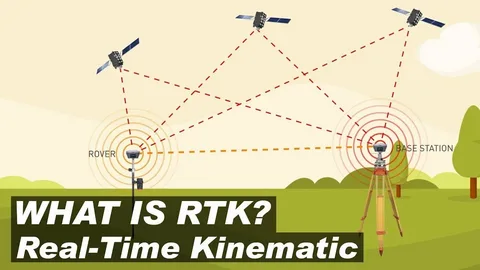
In recent years, RTK GPS technology has transformed the way industries operate. From farming large fields to constructing complex infrastructure, Real-Time Kinematic (RTK) GPS systems offer unmatched precision and efficiency. This article explores how rtk gps is being utilized across sectors, highlighting its key use cases.
What is RTK GPS?
RTK (Real-Time Kinematic) GPS is an advanced satellite navigation system that provides centimeter-level accuracy. Unlike standard GPS, which can have errors of several meters, RTK GPS uses a base station and a rover to correct positional data in real-time. This high precision makes it invaluable for tasks where accuracy is critical.
RTK GPS in Agriculture
Agriculture has embraced RTK GPS to increase productivity and reduce costs. Farmers use RTK GPS for:
- Precision planting: Ensuring seeds are planted at exact intervals for optimal yield.
- Field mapping: Creating accurate maps for crop health monitoring.
- Autonomous machinery: Guiding tractors and harvesters with high precision.
The ability to operate machinery with centimeter-level accuracy minimizes overlaps and gaps, leading to better resource management and increased efficiency.
RTK GPS in Construction
Construction is another sector benefiting immensely from RTK GPS. Contractors and engineers use it for:
- Site surveying: Quickly and accurately mapping land contours.
- Machine guidance: Operating bulldozers, graders, and excavators with precision.
- Structural layout: Aligning foundations, roads, and pipelines precisely as per design.
With RTK GPS, construction projects are completed faster, with fewer errors, and reduced material waste.
Other RTK GPS Applications
Beyond agriculture and construction, RTK GPS is finding applications in:
- Surveying and mapping: Creating detailed topographical maps.
- Autonomous vehicles: Guiding drones and self-driving machinery.
- Marine navigation: Assisting ships in precise docking and route planning.
The versatility of RTK GPS technology makes it a game-changer across multiple industries.
Conclusion
From agriculture to construction: RTK GPS use cases explained show how precision technology is redefining traditional practices. Whether improving crop yields or streamlining construction projects, RTK GPS provides accuracy, efficiency, and reliability. As technology continues to advance, its applications are set to expand, bringing even more transformative benefits to various industries.
