


When it comes to securing materials to concrete, choosing the right fastener is crucial. The two most popular options are concrete screws and anchors. Both serve the same general purpose, but their applications, installation methods, and load-bearing capacities differ significantly. Understanding these differences will help you make the best choice for your project.
What Are Concrete Screws?
Concrete screws, sometimes referred to as masonry screws, are fasteners designed specifically to penetrate concrete, brick, or block. Unlike anchors, concrete screws do not require pre-installed inserts. They create their own threads as they are driven into a pre-drilled hole, providing a secure hold without the need for adhesives or expansion.
Advantages of Concrete Screws
- Easy Installation: Requires only a pilot hole; no additional hardware is needed.
- Removable: Can be removed and reused if necessary.
- Strong Hold: Offers high load-bearing capacity in solid concrete.
Ideal Applications
Concrete screws are ideal for attaching lighter fixtures, such as shelving brackets, electrical boxes, and window frames. They are best suited for projects where a strong, yet temporary, attachment is needed.
What Are Anchors?
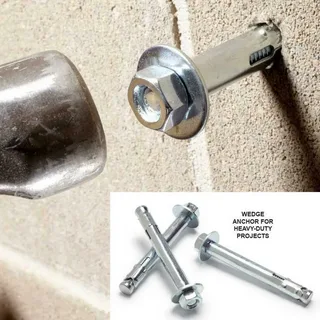
Anchors are devices inserted into a pre-drilled hole in concrete or masonry to provide a secure fastening point. They work by expanding within the hole or by using chemical adhesives to hold the fastener in place. There are various types of anchors, including plastic, metal, and wedge anchors.
Advantages of Anchors
- Versatile: Can support heavy loads depending on the type of anchor.
- Durable: Provides long-term stability in concrete and masonry.
- Multiple Options: Different anchors can be selected based on material and weight requirements.
Ideal Applications
Anchors are best for heavy-duty applications such as mounting handrails, structural supports, or large machinery. They are particularly effective when maximum holding strength is required.
Concrete Screws vs. Anchors: Key Differences
| Feature | Concrete Screws | Anchors |
| Installation | Drill pilot hole, screw in | Drill hole, insert anchor, then fasten |
| Load Capacity | Moderate to high | Moderate to very high |
| Removability | Easy to remove | Usually permanent |
| Material Compatibility | Concrete, block, brick | Concrete, block, brick, stone |
Choosing between concrete screws and anchors depends on your project’s requirements. If you need a fastener that is easy to install and remove, concrete screws are the clear choice. If your project demands maximum strength and long-term durability, anchors are the better option.
Conclusion
Deciding between concrete screws vs. anchors: which fastener should you use? ultimately comes down to the weight of the load, the permanence of the installation, and the material you are fastening to. For light to medium-duty tasks, concrete screws are efficient and convenient. For heavy-duty or structural applications, anchors provide the strength and stability required. By understanding the differences, you can ensure your project is safe, secure, and built to last.
